Home › Road, Street, and Municipal Paving
Partner with an experienced road paving contractor in Huntsville, AL for streets, subdivisions, and municipal projects. Our crews handle full depth construction, resurfacing, and patching to keep local roads smooth and safe for drivers.
Precision Asphalt Huntsville provides professional road paving throughout Huntsville, AL, Alabama and the surrounding area. Our licensed, insured crew delivers safe, clean, on-time work with a free estimate before anything begins. Call (256) 292-9329 or request your free quote.
Road and Municipal Paving in Huntsville That Holds Up to Real Traffic
When Huntsville agencies or contractors call Precision Asphalt Huntsville about road paving, it is almost always for one of three reasons: a new subdivision street that needs to pass inspection, a worn city road that is cracking and raveling, or a widened lane or turn bay that must tie smoothly into existing pavement. We focus on designing each road surface around how it will actually be used in North Alabama, not just on making it look good for the first few months.
Every road or street project starts with a site walk and a traffic discussion. We look at truck routes to Redstone Arsenal, school bus paths, neighborhood cut‑through streets, and commercial access roads around places like Research Park and Memorial Parkway. Traffic type and volume are what drive pavement thickness, base design, and mix choice. A quiet cul‑de‑sac near Hampton Cove can use a different section than an industrial street that sees heavy dump trucks.
We also evaluate drainage and subgrade conditions, because Huntsville’s clay soils and sudden thunderstorms are a bad combination for weak bases. We check for soft spots, trapped water, and existing utility cuts. If we see standing water along edges or “alligator” cracking in wheel paths, we know the problem is deeper than the surface and we plan the repair or reconstruction accordingly.
How the Road Paving Process Works Step by Step
Once the design is set, Precision Asphalt Huntsville follows a very specific sequence to make sure the road performs long term.
1) Layout and grade checks. We verify centerlines, curb lines, and tie‑ins using levels or GPS, then mark transitions at driveways, intersections, and manholes. This keeps the final surface smooth and prevents surprise bumps where new asphalt meets existing pavement.
2) Milling or demolition of existing asphalt. For overlays on city or county roads, we usually mill off a controlled depth, often 1 to 2 inches, to restore curb reveal and remove cracked material. On full reconstructions, we saw cut edges, remove failed pavement, and stockpile or haul off millings for reuse where appropriate.
3) Subgrade repair and base preparation. Under Huntsville’s plastic clays, we often undercut soft areas, then backfill with crushed aggregate or soil cement. For new subdivision streets, we place and compact a graded aggregate base (GAB) or crushed stone, usually 6 to 8 inches thick or more depending on design. We compact in lifts with rollers and proof‑roll the surface so any pumping or deflection shows up before paving.
4) Tack coat application. Before placing a new asphalt layer over existing pavement or base, we apply an asphalt emulsion tack coat with a distributor truck. This creates a bond between layers so they act as one structure instead of sliding over each other, which is critical on hills and turning movements.
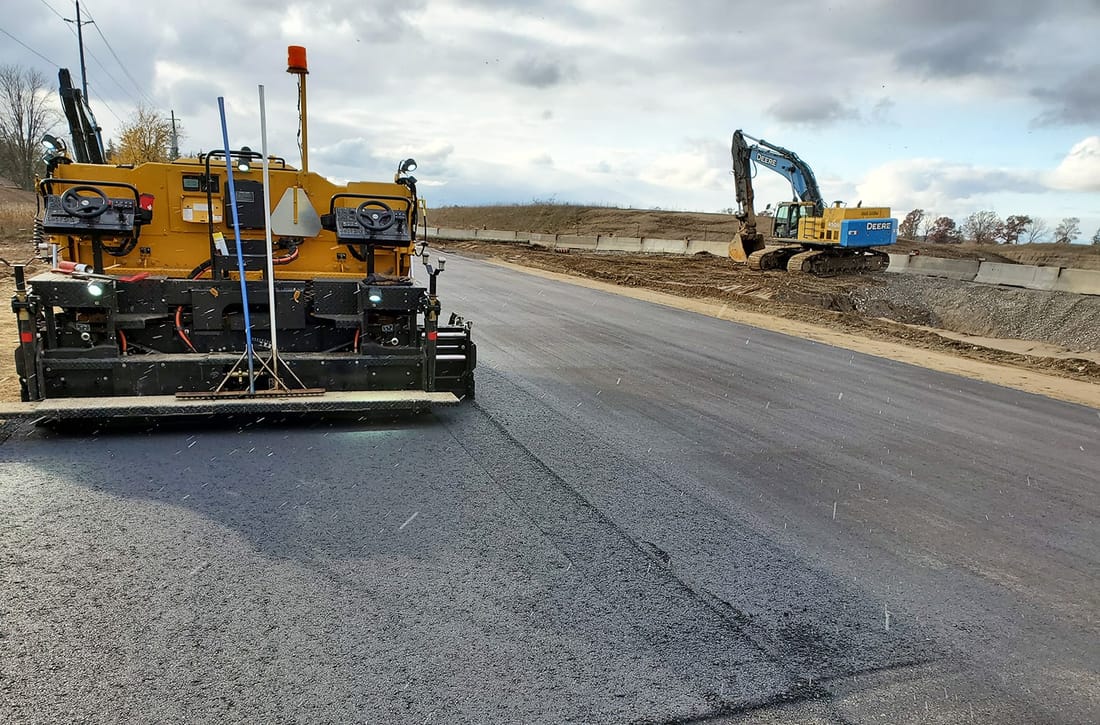
5) Asphalt placement. We use a paver to place hot mix asphalt at the specified thickness, often in multiple lifts. For a typical neighborhood street, that might be a 2 to 3 inch base course then a 1.5 inch surface course. For heavier use roads, additional or thicker lifts are used. We tightly coordinate trucking from the plant to maintain consistent temperature and avoid cold joints.
6) Compaction and finishing. Steel drum and pneumatic rollers compact the asphalt to target density. Our operators stagger rolling patterns and pay close attention to joints at centerlines, edges, and tie‑ins so they do not become future crack lines. We then trim around manholes, valve boxes, and inlets for a neat, even finish.
7) Striping and traffic control. After cooling, we add lane lines, crosswalks, stop bars, and symbols as needed, using paint or thermoplastic depending on traffic and budget. For city and county roads, we follow local MUTCD standards. We also provide temporary traffic control plans to keep residents, drivers, and workers safe during every stage.
Asphalt Mixes and Design Choices for North Alabama Roads
Not every “road paving” job in Huntsville uses the same asphalt mix. At Precision Asphalt Huntsville, we match the mix design and section to how the road will be used and to local weather patterns.
For neighborhood streets, we often use a finer surface mix that gives a smoother, quieter ride and good appearance in front of homes. For busier collector streets or commercial access roads near shopping centers or industrial parks, we recommend a slightly coarser, more rut‑resistant surface mix that can handle frequent braking and turning. Heavier truck routes may require a stiffer binder grade and thicker base to resist rutting in summer heat.
Huntsville sees wide temperature swings and occasional freeze‑thaw, even if it is not as extreme as northern climates. That means we balance flexibility and stiffness. A mix that is too stiff can crack sooner in cold snaps, while one that is too soft can rut in July and August. Our mix selections consider ALDOT and local specs but we also look at how similar nearby roads have actually performed over the years.
We also offer options like leveling courses to correct wavy or rutted existing pavements before the final surface goes down, and small profile adjustments to improve drainage toward inlets. In some municipal projects, we coordinate with engineers to use low‑slope crowns where there are ADA ramps and sidewalks, so you get good drainage without violating accessibility rules.
On the sustainability side, many Huntsville agencies are interested in using reclaimed asphalt pavement (RAP) responsibly. We can incorporate RAP within plant mix within approved limits, which can lower cost and environmental impact without sacrificing performance when done correctly. We are transparent with owners about what percentage is in the mix and how it affects the job.
What Affects Cost and Timeline for Road, Street, and Municipal Paving
Public budgets and HOA funds are always tight, so understanding cost drivers up front is important. When Precision Asphalt Huntsville prepares a proposal, we break down the factors that have the biggest impact on price and schedule.
Existing conditions are usually the number one variable. A straightforward mill and overlay on a structurally sound road is much less expensive per square yard than a street that needs undercutting, base replacement, and utility adjustments. If we find widespread base failure or saturated subgrade, we will show you the difference between a short‑term patch and a proper fix so you can make an informed choice.
Thickness and section type also matter. Increasing asphalt thickness or base depth for a commercial or industrial road adds upfront cost but can extend the life of the pavement, especially in truck areas. For neighborhoods, we often present “good, better, best” options so HOAs or developers can balance life cycle with budget.
Access and phasing influence both cost and community impact. Busy streets near schools or retail usually require night work or detailed phasing so at least one lane stays open. That can add costs for flaggers, lighting, and traffic control devices. Cul‑de‑sacs and subdivision streets often work best in 2 to 3 day segments, with clear communication to residents about when they can drive or park.
Material pricing and plant distance are additional variables. Because Huntsville is growing fast, asphalt plants can be busy and haul times vary by project location. We schedule deliveries to keep pavers moving and avoid cold loads, but longer hauls will affect both the quote and the ideal time of day to pave.
Weather is another timeline factor. In North Alabama, we are careful with paving during cold snaps or heavy rain patterns. We would rather reschedule than put down asphalt that will not compact or bond correctly. Our team stays in touch with your project manager or city contact about weather calls so there are no surprises.
Common Road Problems in Huntsville and How We Fix Them
Local roads around Huntsville develop some predictable issues over time, and knowing what they mean helps you choose the right repair rather than just covering symptoms.
Alligator cracking in wheel paths usually tells us the base or subgrade has failed, often due to water intrusion. For that, Precision Asphalt Huntsville typically recommends cutting out the affected area, repairing the base with compacted stone or soil cement, then replacing the asphalt in proper lifts. Simply skin‑patching the surface over these cracks is a short‑lived fix.
Rutting and shoving, especially at intersections or stop bars, often come from heavy braking, slow traffic, or a mix that is too soft for the loading. We mill out the rutted areas, verify the base is firm, then replace with a more rut‑resistant mix and adequate thickness. At busy city intersections, it is common to upgrade just the intersection area with a stronger section rather than rebuilding the entire corridor.
Edge failures and crumbling along narrow rural roads or older subdivision streets tend to occur where there is little or no shoulder. Water softens the edge, traffic breaks it off, and the problem grows. Where possible, we saw cut back into solid pavement, repair the base, and widen slightly or add a stable shoulder material to support the edge.
Drainage issues are particularly important in Huntsville due to heavy summer storms. We often see standing water that leads to premature cracking and potholes. Solutions might include minor regrading, adding or adjusting inlets, or placing a thin leveling course to restore proper cross slope before resurfacing.
For agencies or HOAs planning ahead, we also help build pavement maintenance plans. That can include crack sealing, periodic thin overlays, or mill and inlay cycles instead of waiting until roads are completely failed. Taking this approach usually stretches budgets further and keeps streets looking better for residents and drivers.
If you are responsible for a road, street, or small municipal network in or around Huntsville and are not sure whether you need patches, an overlay, or full reconstruction, we are happy to walk the site, take cores if needed, and explain the options in plain language so you can make a confident decision.